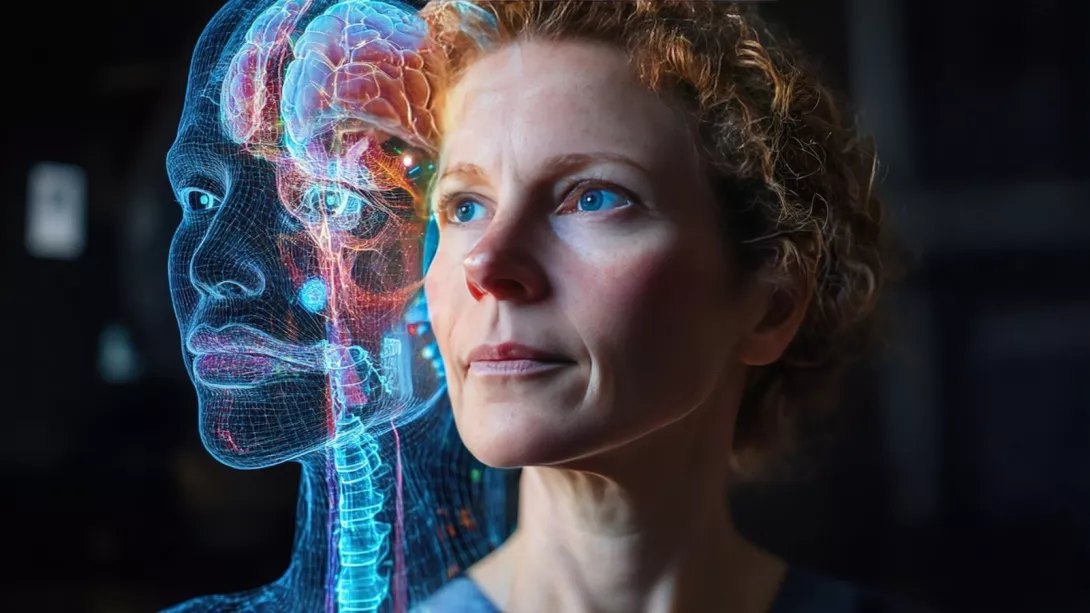
Cardiovascular disease is the leading cause of death worldwide, responsible for some 19.2 million casualties per year, globally, despite being largely treatable when caught early. But it doesn’t have to be this way. Imagine a future where your doctor can detect heart disease years before you experience symptoms and test treatments on a virtual replica of your heart before you ever enter the operating room.
Digital twins—personalized, virtual replicas of a patient's heart and cardiovascular system—are transforming cardiac care by enabling doctors to simulate treatments, forecast disease progression and plan surgeries with high precision and efficacy. By bridging high-performance computational engineering with bedside clinical practice, this emerging field enables physicians to detect blocked arteries years before a heart attack occurs and empowers pediatric surgeons to virtually map complex, life-saving procedures for infants born with severe congenital disorders. Ultimately, cardio AI transforms static medical imaging (MRIs, EKGs, CT scans) and electronic medical records into dynamic models that advance better surgical outcomes and can provide lifelong, personalized prevention for patients.
A Unique, Interdisciplinary Opportunity
This December, UT Austin’s Pediatric to Adult Cardio AI Conference: Digital Twins will offer something rarely found at similar events: a shared space where computational engineers and computer scientists can connect directly with clinicians, medical researchers and industry leaders. Over three days, attendees will exchange expertise, build collaborations and explore practical strategies for moving AI and digital twin technologies from technical innovation into pediatric and adult cardiovascular care.
Jointly hosted by Dell Medical School, the Oden Institute for Computational Engineering and Sciences and Dell Children’s Medical Center of Central Texas, the conference builds on last year’s event with new pediatric cardiology forums showcasing cutting-edge applications of AI and virtual modeling.
“Our goal is to create a premier conference where people working across computer science and computational engineering can interact directly with physicians,” says co-organizer Charley Taylor, a pioneer in cardiovascular digital twin modeling and director of UT Austin’s Center for Computational Medicine,a collaborative research center between Dell Med and the Oden Institute.
Learn How Cardio AI Is Advancing Care Across the Lifespan
This year’s Pediatric to Adult Cardio AI Conference will showcase applications across the entire patient lifespan. In pediatric care, keynote presentations from computational scientists and pediatric cardiac surgeons will demonstrate how bespoke digital twin models enable surgical teams to plan complex interventions for infants born with severe congenital heart disorders before entering the operating room.
On the adult side, the conference will highlight how AI-driven 3D modeling and non-invasive digital twins of cardiac function are transforming clinical care for patients with heart disease. Speakers will address critical milestones in transitioning these tools from regulatory approval to real-world impact, including securing permanent Medicare reimbursement codes and gaining inclusion in clinical practice guidelines. The event aims to foster the cross-disciplinary collaboration needed to refine these technologies—enabling clinicians to detect early-stage heart disease, track disease progression over time, and tailor individualized treatment plans that reduce cardiovascular risk.
"Heart disease has been the leading cause of death in the United States for a long time,” says Taylor. “We will never change it if we don't ultimately figure out how to screen patients for heart disease, because if you find it early, you can treat it early."
Bridging Research, Engineering and Clinical Care at UT
Taylor underscores the importance of UT Austin as a destination and research hub. “Academic environments are, by nature, interdisciplinary and essential hubs for advancing theoretical research into real-world clinical care. By bringing together computer scientists, computational engineers, and practicing physicians under one roof, an academic ecosystem bridges the traditional gap between technical innovation and clinical workflow.”
Unlike industry, which focuses on the more lucrative adult conditions, a university hub leverages open-source research and philanthropic partnerships to address critical yet underfunded areas like pediatric cardiology and customized surgical planning for congenital heart defects.
“One of our key priorities at UT is developing open-source technology that can integrate multiple forms of medical imaging to create a digital twin of a patient’s heart and track their cardiovascular health throughout their lifetime,” says Taylor.
By bringing technical innovators and medical professionals into the same room, the conference aims to transform personalized digital twin models from an emerging frontier into an accessible standard of care.
The Pediatric to Adult Cardio AI Conference takes place December 10–12, 2026, at the AT&T Conference Center on the UT Austin main campus. Learn more about the event and register now.