FAI Talk: Histories of Artificial Intelligence
Abstract: When did the term Artificial Intelligence (AI) come into the world? What did it mean and how has it developed since its emergence in the mid-20th century? AI was coined as a term for a field of research in 1955, when the young mathematician John McCarthy at Dartmouth College in Hanover, New Hampshire, planned a “Summer Research Project on Artificial Intelligence”, which he, together with Claude E. Shannon, Marvin Minsky and Nathaniel Rochester, proposed to the Rockefeller Foundation to fund. Having previously failed with his proposal of "Intelligent Machines" as the title of the volume he and Shannon then published as "Automata Studies", McCarthy then pushed using the word "intelligence".
Speculations as to whether machines exhibit intelligent behavior have been made before, and Alan M. Turing discussed this in his article ‘Computing Machinery and Intelligence’ in 1950. The philosopher John Haugeland described AI as a fashion - "Good Old Fashioned Artificial Intelligence" (GOFAI) in his 1985 book Artificial Intelligence: The Very Idea. In this way, 30 years after the Dartmouth event, he distinguished what have since been called ‘classical’ AI methods of symbolic representation from newer approaches that do not use explicit high-level symbols, such as mathematical optimization, statistical classifiers and neural networks. These "new-fashioned AI", "new wave AI" or "new-fangled AI" (NFAI) researches almost totally shape our current concept of AI, mostly without considering its historical developments and meanings. In this lecture, I present a view on the history of AI and these mentioned fashions.
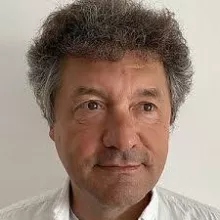
About the speaker: Rudolf Seising obtained his Ph.D. in Philosophy of Science and the Habilitation in History of science from the Ludwig-Maximilians-University (LMU) in Munich after studies of Mathematics, Physics and Philosophy at the Ruhr-University of Bochum. He was acting as Professor for the History of science at the LMU (2009) and at the Friedrich-Schiller-University in Jena (2014-2017). Dr. Seising was Visiting Researcher (2008-2010) and Adjoint Researcher (2010-2014) at the European Centre for Soft Computing in Mieres (Asturias), Spain and he has been several times Visiting Scholar at the University of California, Berkeley. Since 2017, he is with the Research Institute for the History of Science and Technology of the Deutsches Museum in Munich. He managed the historical research project "IGGI – Ingenieur-Geist und Geistes-Ingenieure: Eine Geschichte der Künstlichen Intelligenz in der Bundesrepublik Deutschland" ("IGGI - The Engineering Spirit and Engineers of Mind: A History of AI in the Federal Republic of Germany") (2019-2023) and he heads the DFG project ArtViWo – Artificial Vision at Work. This project investigates the scientific and technical conditions under which human vision has become a question of information processing.